

In this Squiggly Shortcut episode, Helen shares a practical, step-by-step framework for asking for help at work in a way that feels confident, clear, and effective.
Many of us struggle to ask for help because we fear looking incompetent, don’t want to burden others, or try to push through on our own. Helen breaks down how to neutralize that anxiety, identify what kind of help you need – support, solutions, or a sounding board- figure out who can give it, and frame your ask so it’s actionable and easy to respond to.
If you’ve ever felt stuck or overwhelmed at work, this episode will give you a simple, Post-It-note-sized system to get the support you need and move your squiggly career forward.
Need some more squiggly career support?
1. Download our free careers tools
2. Sign up for our Squiggly Careers Skills Sprint
3. Sign up for Squiggly Careers in Action, a weekly summary of the latest squiggly career tools
4. Pre-order our new book, Learn Like a Lobster.


Helen Tupper: Hi, everybody, it is Helen here from the Squiggly Careers podcast and you are listening to one of our Squiggly Shortcut episodes.
These episodes come out every Thursday. They're designed to be a really quick listen to help you with the specific challenge, opportunity problem you might be having at work right now. And today's topic is about asking for help.
The more we are able to ask for help at work, the less likely we are to get stuck stuck in situations and the more able we are to succeed in our Squiggly career. So, good news on that front. However, the bad news is that lots of us find this really hard to do. We worry that people will think we don't know what we're doing, so we feel a bit vulnerable and exposed when we ask for help.
Also, if you're anything like me, I have this sort of dogged persistence where I think, well, I'll just. I'll just work a bit harder and then I'll be able to do it.
Or perhaps sometimes you think, well, I don't want to bother that person because they're really busy too. But all of these blockers that we put in the way of asking for help means that we are more likely to struggle for longer. It's more likely that we're going to be ineffective in the way that we're working. You know, it's faster and easier and often more enjoyable when we ask for the help that we need at work.
So we need a practical approach to be able to do this a bit better. And that is what I have for you today. And as I was going through my own thinking about how to ask for help in a way that feels easy, I ended up writing a lot of notes on a Post it note and that's what I'm going to talk through today.
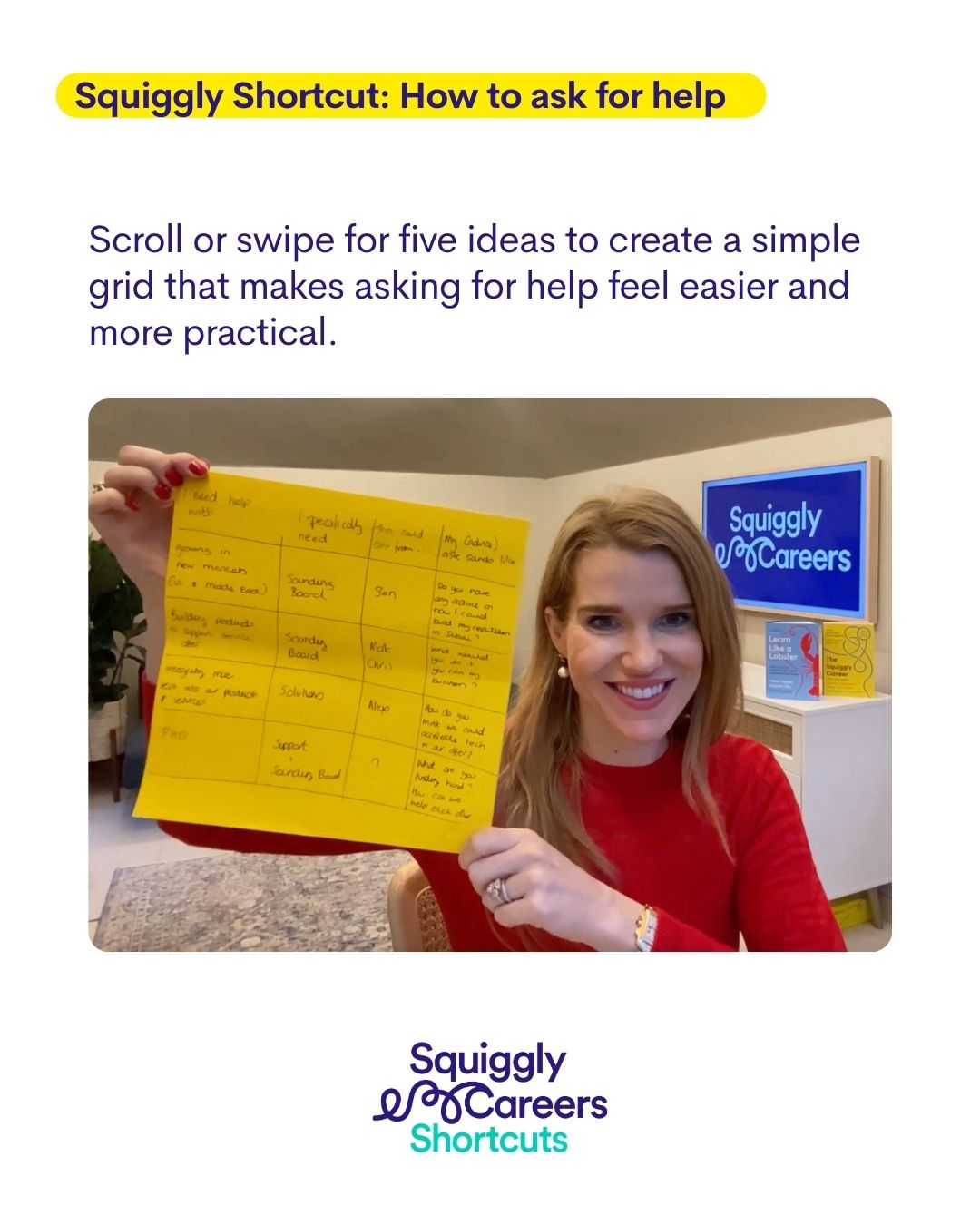
So if, if visuals help you, I would recommend heading over to our YouTube channel and you can kind of watch this there. You'll see, see me holding up the post it note with the framework, but I will do my very best to explain it if you are listening right now in your car, walking your dog or wherever, wherever you like to listen to the podcast.
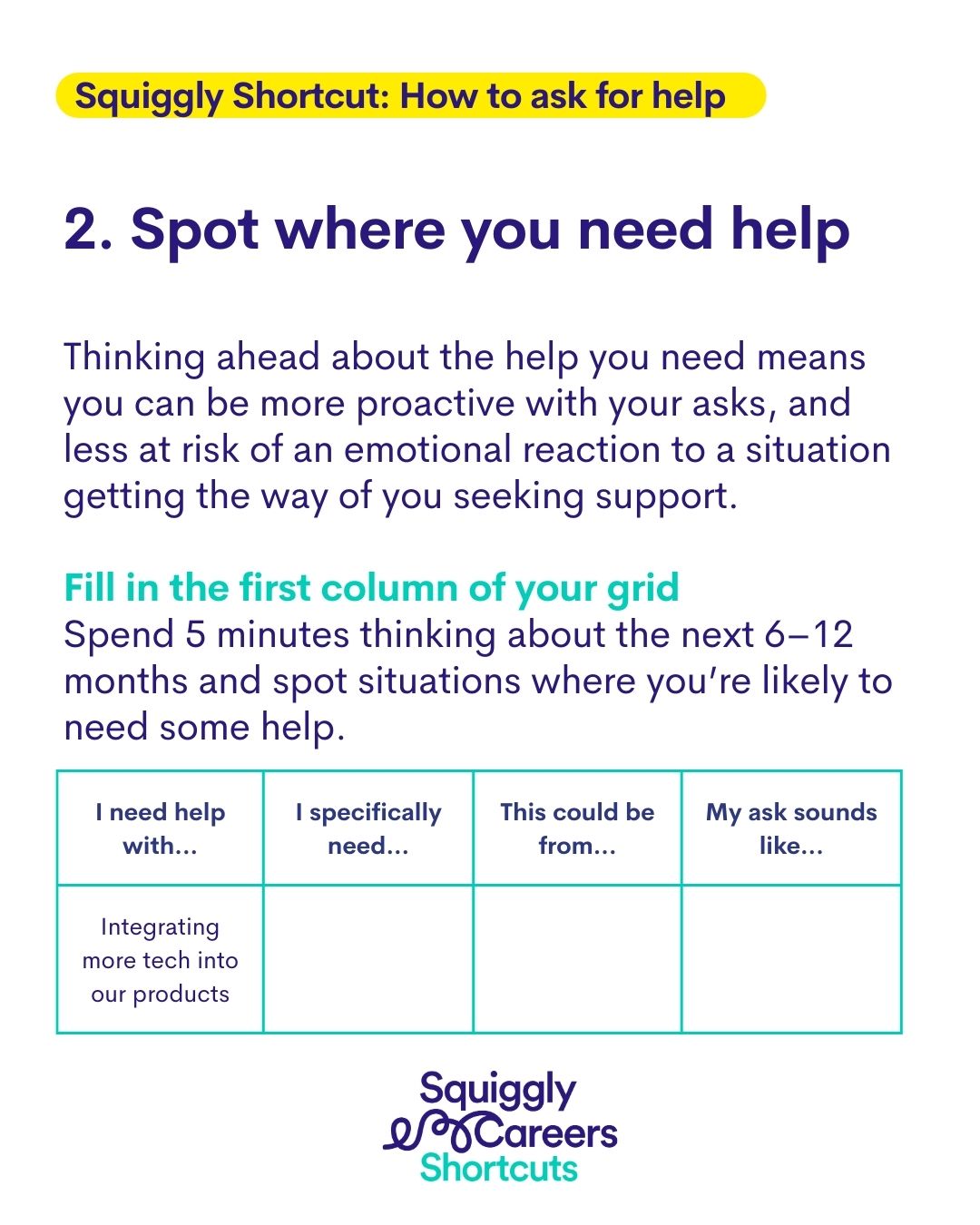
So I think the first thing, when we're asking for help, the first thing that we need to do is we sort of need to neutralise the ask in our own heads because of all this emotion that we get with asking for help. And often we ask for help when we really, really need it. So it's a kind of more of a pie pressure situation or a problem. So I want to neutralise that because I don't think all of that emotion is really helping us. So right now I think a very useful thing for you to do is to spend five minutes or writing down all the things that you need a bit of help with at work. And that might be projects that you're working on, it might be things that you need for your development. So maybe a bit longer term.
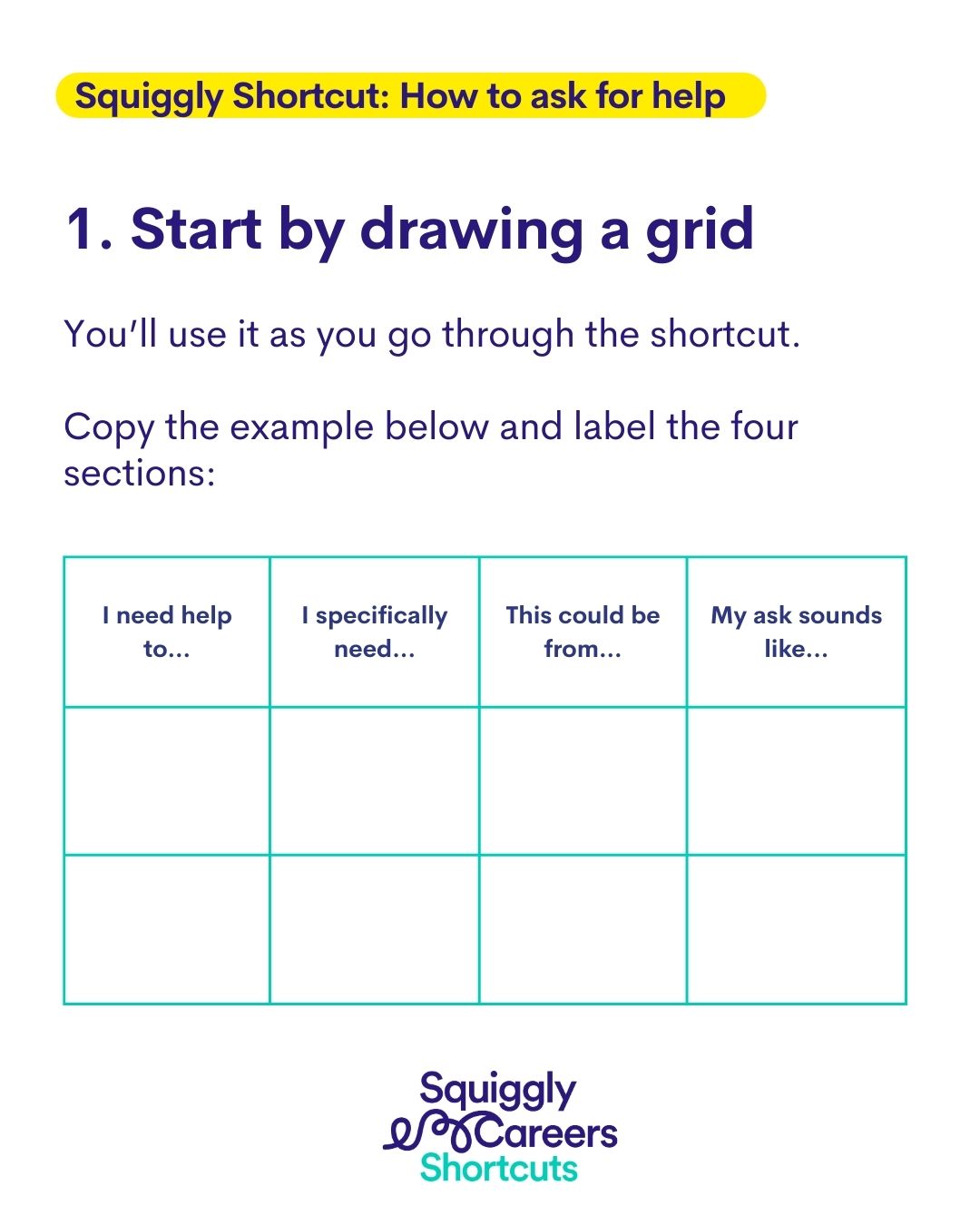
So I'm going to hold my post it note up now. This is everything that we're going to talk through, but in this first column here. So I've drawn a bit of a table with four columns and in the first column I've just written, I need help with. And I've put four different things. So growing in new markets, US and Middle East, I've put building products to support our service offer. I put integrating more technology into our products and services and then I've put PhD, just PhD because that's quite a big one that I need some help with. So that is me being quite neutral. I'm not panicking right now, but realistically, there are some things that I need help with.
So I want you to do that kind of neutral view of what you need help with in terms of your work and development over the next six to 12 months.
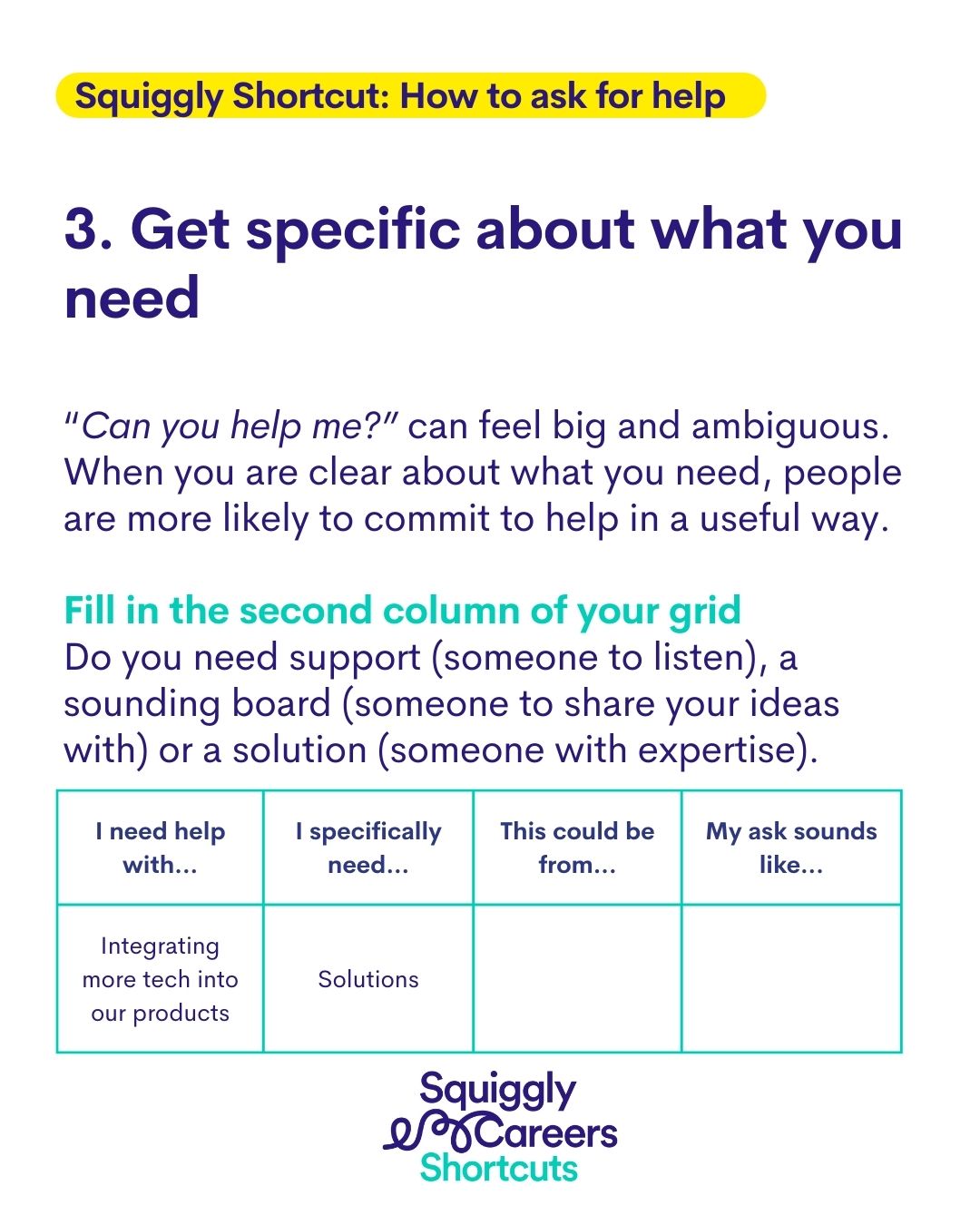
The next column is I want you to think about what type of help would be most effective and here there are three. So you might need some support. This often looks like a peer who gets the thing that you're doing. Maybe they need some help with it. At the same time it's someone that's quite trust that you can. You can just talk to and they understand. So maybe you need a bit of support with that thing. Maybe you need solutions, maybe you need someone who has been there and done it and they can tell you how to do it. Or maybe you need a sounding board, like an ideasy person, a connector type person who can build on your thinking and help you to be better. Maybe you need something like that.
They are three different kinds of help. So rather than saying can I have some help? Which feels quite big and can be quite hard for someone to respond to, we are going to think well with that thing. I need help with. Specifically what kind of help do I need?
So in my next column I've got. I specifically need. And if I take that first one. So I said I need help with growing in new markets and I put I need a sounding board. I need. I've got loads of ideas. I could just do with somebody who's in that market to help build my ideas better. Or for example, on the integrating more technology, which is something I need help with. I said I specifically need solutions. I need someone who has done that because I don't know how to do it and I need someone who's got expertise in the area that I don't. So you're going to go through each of the areas you need help with and write down whether it's solutions, a sounding board or actually a bit of support.
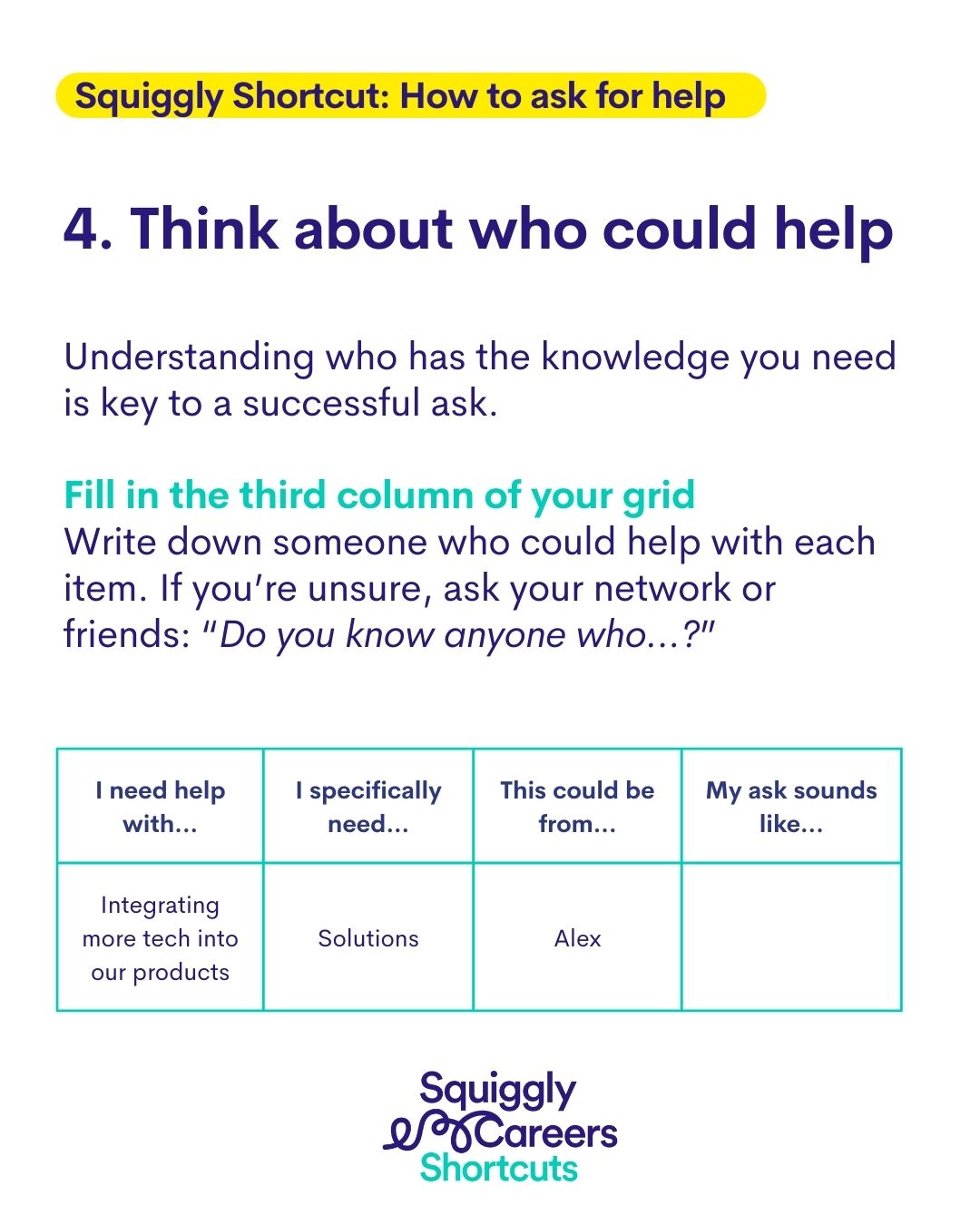
Now the next thing is who's the person, who's the person that has got that ability to give you that kind of support? And I would just write their names down. And I've done that in my third column. So I've written, you know, Ben for new markets, for example, I've written Mark and Chris for building out our products. These are people that I know and that I believe will want to help me.
However, for the PhD, I've got a giant question mark because I don't know who can help me. And that's okay because you can go to your friends or colleagues and you can say, do you know anyone who you know? I'm looking for some, someone who's really good at solutions on this area. Do you know anyone who. So this means your ask for an individual can be much more specific, which means that someone's more likely to make a connection or think can help you.
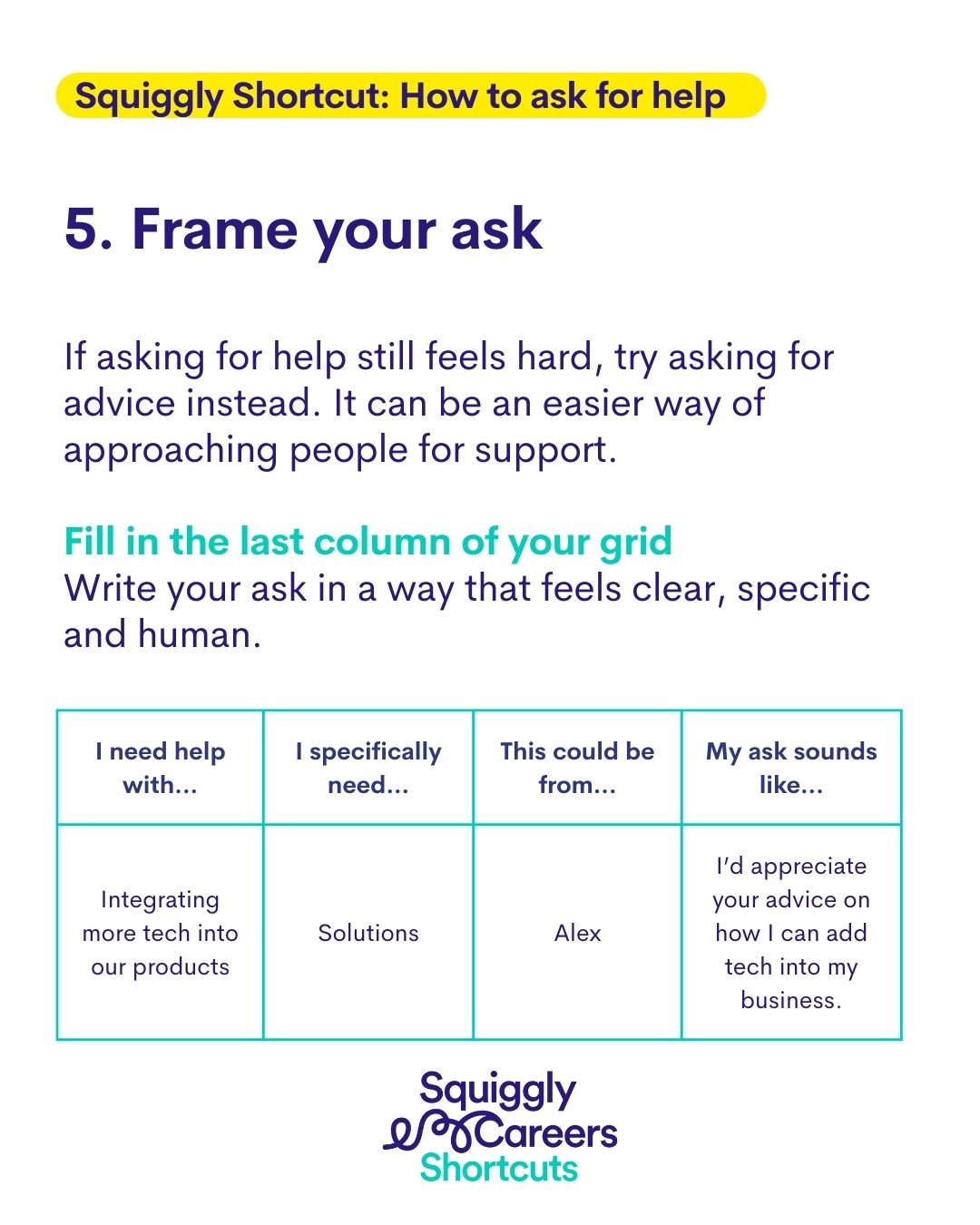
Now the fourth and final area is how you frame the ask. So this is the last column on my table here. How do you frame the ask? I've written here: “My ask sounds like”. What I would recommend here is to avoid the can you help me? Can I have some help? Because it's big, it's ambiguous, as I said, it's hard for people to understand what you mean.
Instead, I would try to ask for advice. I'd frame it differently. So for my first example, the growing in new market, my ask sounds like do you have any advice on how I can build my reputation and brand in Dubai? For example, my second one where I was talking about building products and supporting our service offer, my ask sounds like what would you do if you were running my business?
My PhD ask where actually I'm looking for support, kind of that peer level support. My ask there sounds like what are you finding hard and how could we help each other? Framing your ask for help without always mentioning the word help means that you will feel more confident when you make the ask. If you are in the moment and you've not thought about it, you might stumble over your words. You lose clarity, you lose confidence. But if you write it down, it's a lot clearer and it's easier for you to communicate.
So these are my four steps for asking for help in a way that can help you to move forward with your Squiggly career. As I said, I've written this framework, I've written my examples down. So I'll possibly pop a photo of this on our Instagram page or our LinkedIn page as well. So just find amazing if and you'll be able to see that there. But you can see me talking all through on YouTube if that makes sense for you. But I hope that is been a helpful Squiggly Shortcut. On the topic of asking for help. If you've got any other areas that you need a bit of support with, please let us know. We're just helenandsarah@squigglycareers.com.
Sign up to the Squiggly Careers Newsletter and get our latest ideas, tools and inspiration every week - all in one place, straight to your inbox


