

What if mentoring had nothing to do with seniority — and everything to do with strengths? In this Squiggly Shortcut, Sarah makes the case for a more inclusive, more accessible approach to mentoring that every team can make happen straight away.
🎯 What You’ll Learn
– Why strengths-based mentoring is more useful than traditional senior-to-junior mentoring
– Three ways to make it work: one way, two way (strengths swapping), and one to many
– How to make your ask for mentoring specific, easy to say yes to, and genuinely flattering to receive
– Why building a spreadsheet of team strengths could be one of the most useful things your team does this year
📚 Resources Mentioned
Episode 122 – How to make your strengths show up and stand out
For questions about Squiggly Careers or to share feedback, please email: helenandsarah@squigglycareers.com
Need some more squiggly career support?
1. Download our free careers tools
2. Sign up for our Squiggly Careers Skills Sprint
3. Sign up for the Squiggly Careers Newsletter, a weekly summary of the latest squiggly career tools
4. Order our new book, Learn Like a Lobster.

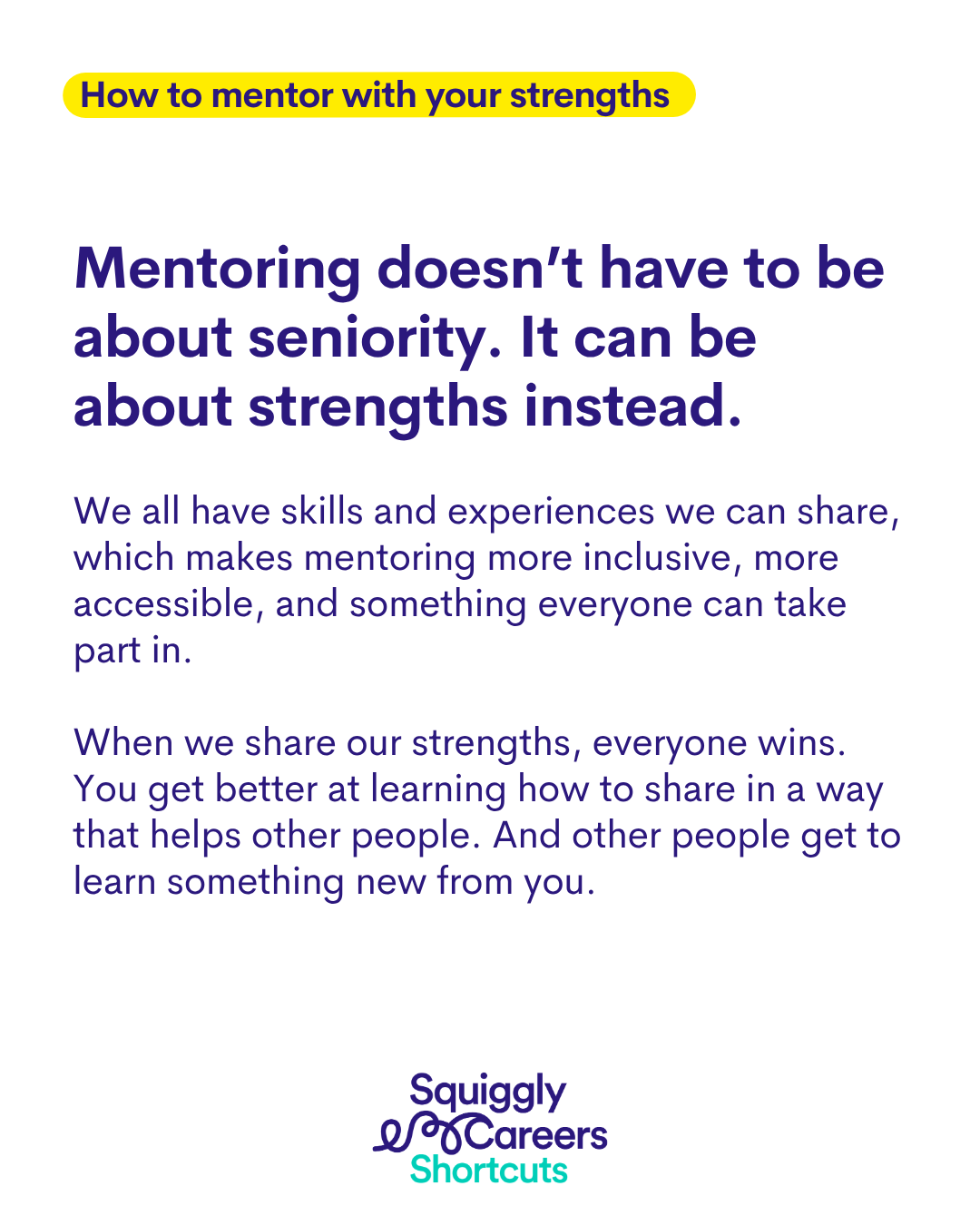
Hi, my name's Sarah, and in this squiggly shortcut, I'm going to talk about mentoring based on sharing your strengths rather than how senior you are. So often I think one of the mistakes that we make with mentoring is thinking that somebody, to be a useful mentor, needs to be in a more senior position than us. And I think sometimes that makes it hard to make happen, makes it feel intimidating, and you sort of get into that awkwardness of like, how do you ask someone to be a mentor?
And we worry that everybody is busy, but the one thing that all of us have in common is that we all have strengths and we all have strengths that we can share with each other. So I think this is a more inclusive and more universal approach to mentoring that every team and organisation could benefit from. So when we share our strengths, everybody wins. You win by sharing your strength because you will make it stronger. By figuring out what makes you good at something and sharing it in a way that makes sense to other people, you're sort of building on that strength. And we know it is always easier to kind of grow your strengths, to build those strengths better than it is to work on your weaknesses. And that's how we have the most impact in the jobs that we do. And then other people win because they get to fill the gaps that they've got, they get to learn about something new, they get to benefit from your wisdom and expertise. And I think you can do this in a really easy, straightforward way.
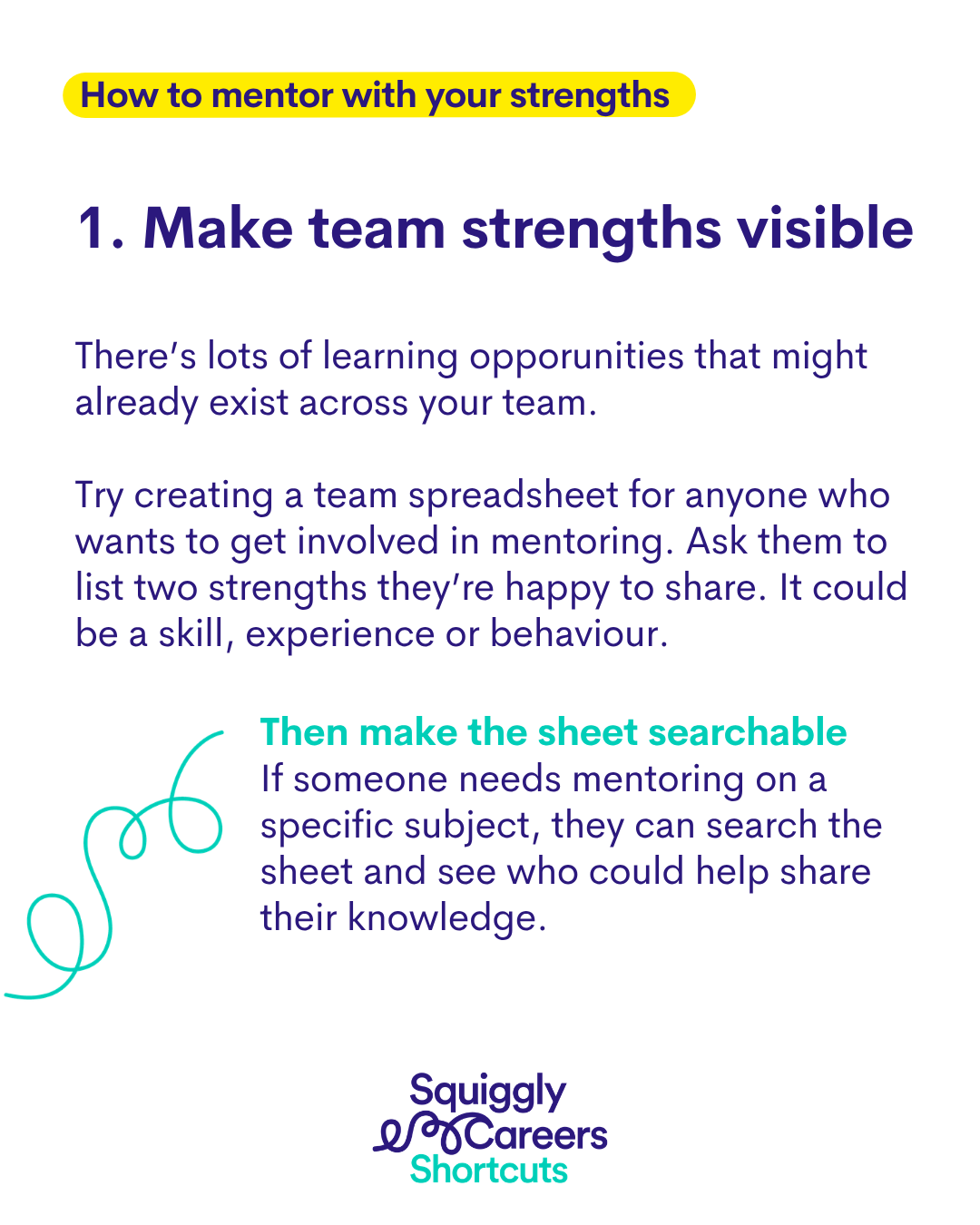
So I've seen some teams just set up an Excel spreadsheet and I'm imagining AI could make this even faster for you now, where everybody who wants to get involved just puts their name and two strengths they've got that they are happy to share. That could be something really technical, that could be a behaviour. Maybe it's, I'm a really good listener, maybe I'm amazing at writing the one-page project on a page that we all need to do. Maybe you're really good at writing briefs, whatever it might be. And then it's that spreadsheet or that kind of AI can become searchable. So if there's something that I want some mentoring in, maybe presenting, I'm like, oh, I'd like to get some mentoring on presenting. It's something I know I need to do more of and I want to get better at. I can search presenting and maybe a couple of people pop up who are happy to share their kind of knowledge and experience with me on presenting.
I also like the idea here as well that we are getting Multiple mentors, because, you know, no one has a monopoly on wisdom. We've said that before. And it's useful to speak to different people who might have different perspectives, different advice, different words of wisdom that we can borrow brilliance from.
So few ways that I've seen this work. So you can just do this in a sort of more one way.
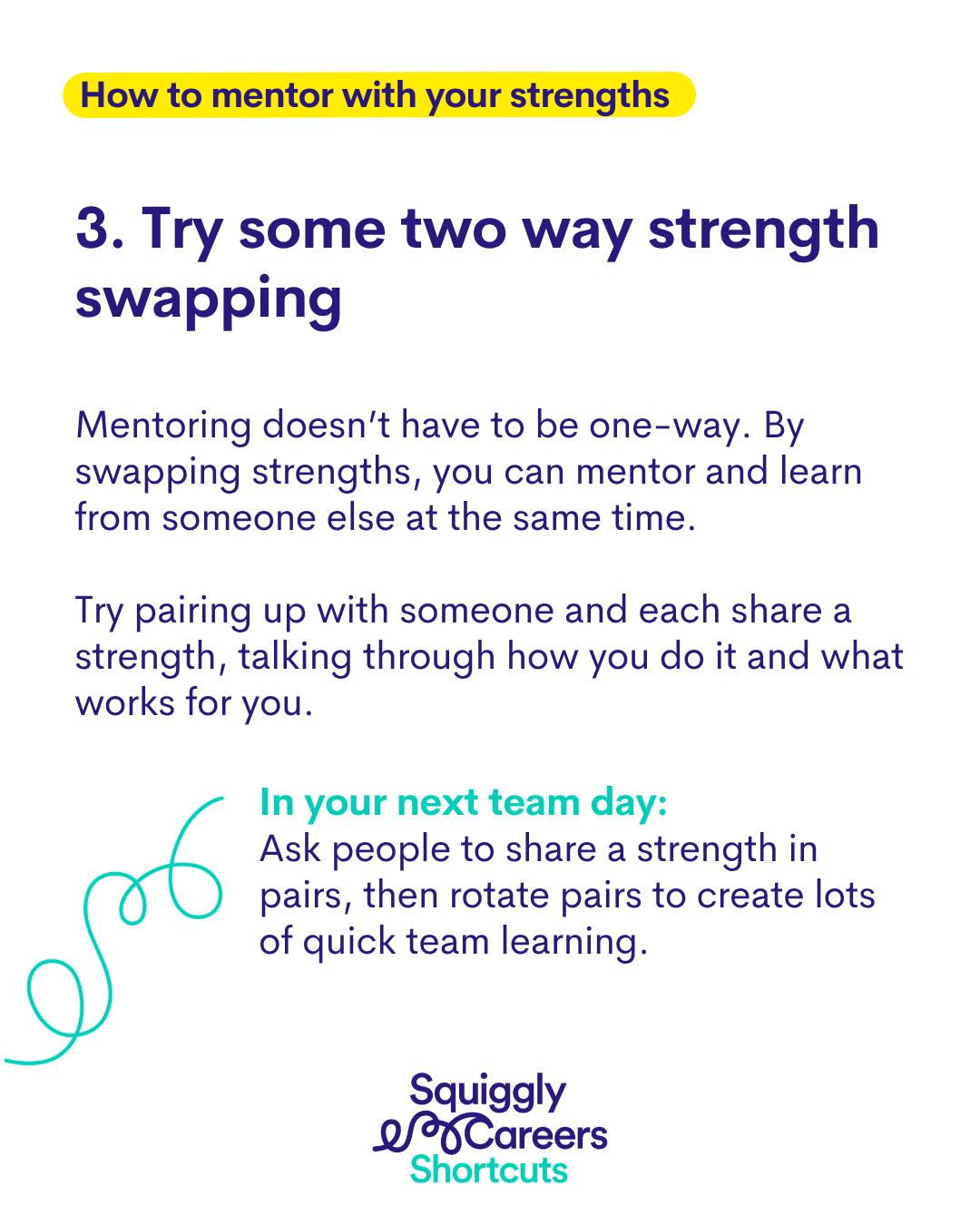
So that might be me going to talk to that person who's really brilliant at presenting. They're sharing their top tips, they're giving me some advice, I'm listening, I'm learning, I'm saying thank you and that's great. And again, we're taking away the pressure of needing to then have multiple conversations. It's just a sort of in the moment mentoring conversation. And that's one way I'm listening and learning and that person is sort of giving to me. We could do two way. So that would be strengths swapping. So maybe I want to learn about presenting and that person wants to learn from me about developing ideas. So I've seen some teams before where they partner people up. Maybe you could do this as part of a team day. This would work really well, virtually as well as in a room. And actually everybody shares a strength they've got.
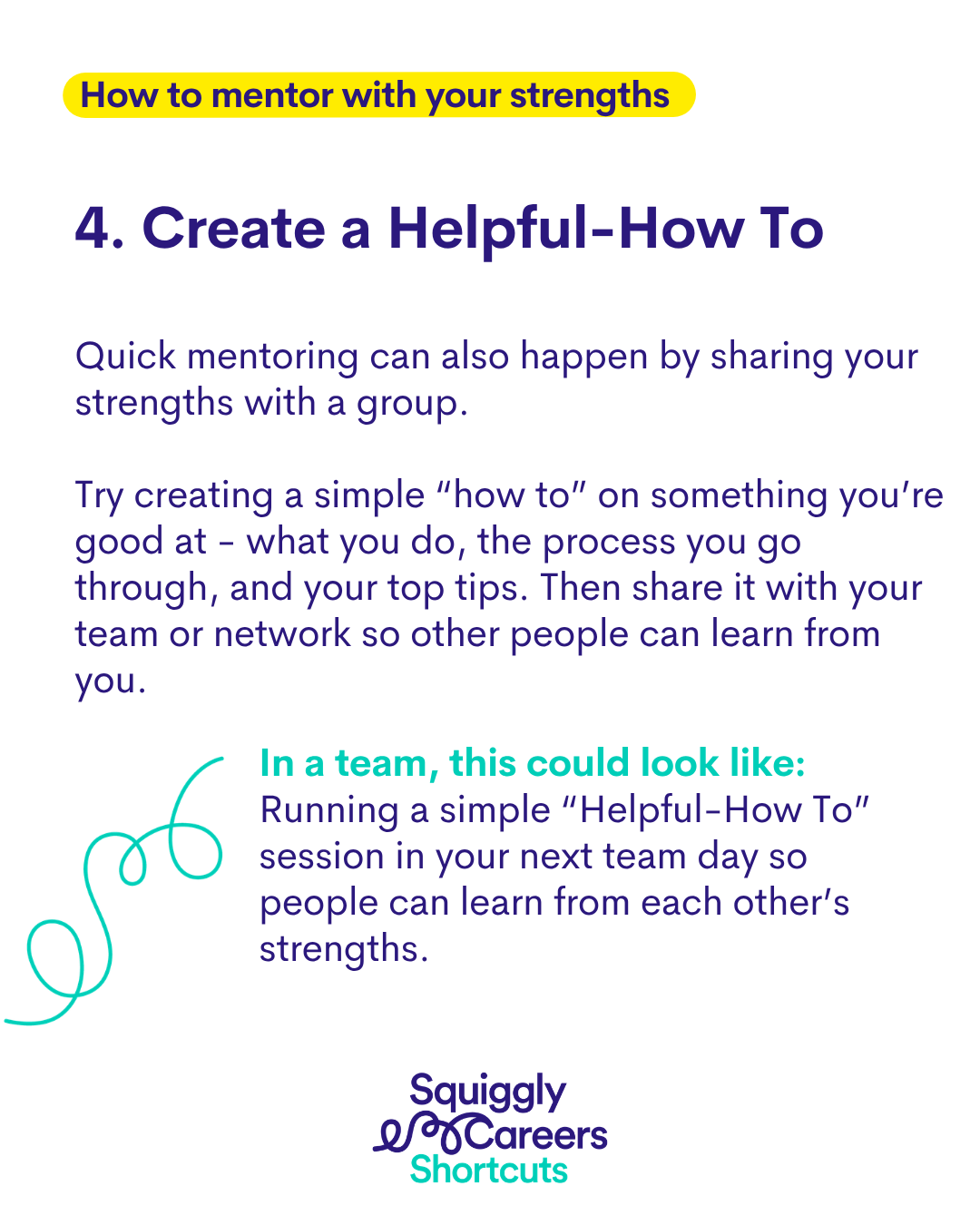
Then you swap and then the other person shares with them and. And then maybe you move on and you could do that multiple times with lots of different pairs or you could even do it one to many. So this feels a bit more like the helpful how to's that you might have come across if you've read learn like a lobster or done our lobster sprint with us. And so if you've got a team, team of 20 or 50 people, maybe you actually create a section in your team days where people do some strength sharing.
So someone gets up at the front and they do three minutes of sharing a strength that they've got. Like what makes them good at it, the process they go through. Some top tips, some helpful ways for you to get better at that thing. And again, we make it kind of easy to do, easy to get involved in.
We know that often lots of people's sort of strengths don't get shared as much as they could. And almost there's not enough flow of learning across teams. And so we perhaps sometimes even end up looking outside for learning that we have got within our teams because we just don't create the opportunity. I don't think people keep learning to themselves because they are selfish. I think it's because they just don't have the. When they don't have the opportunity to share.
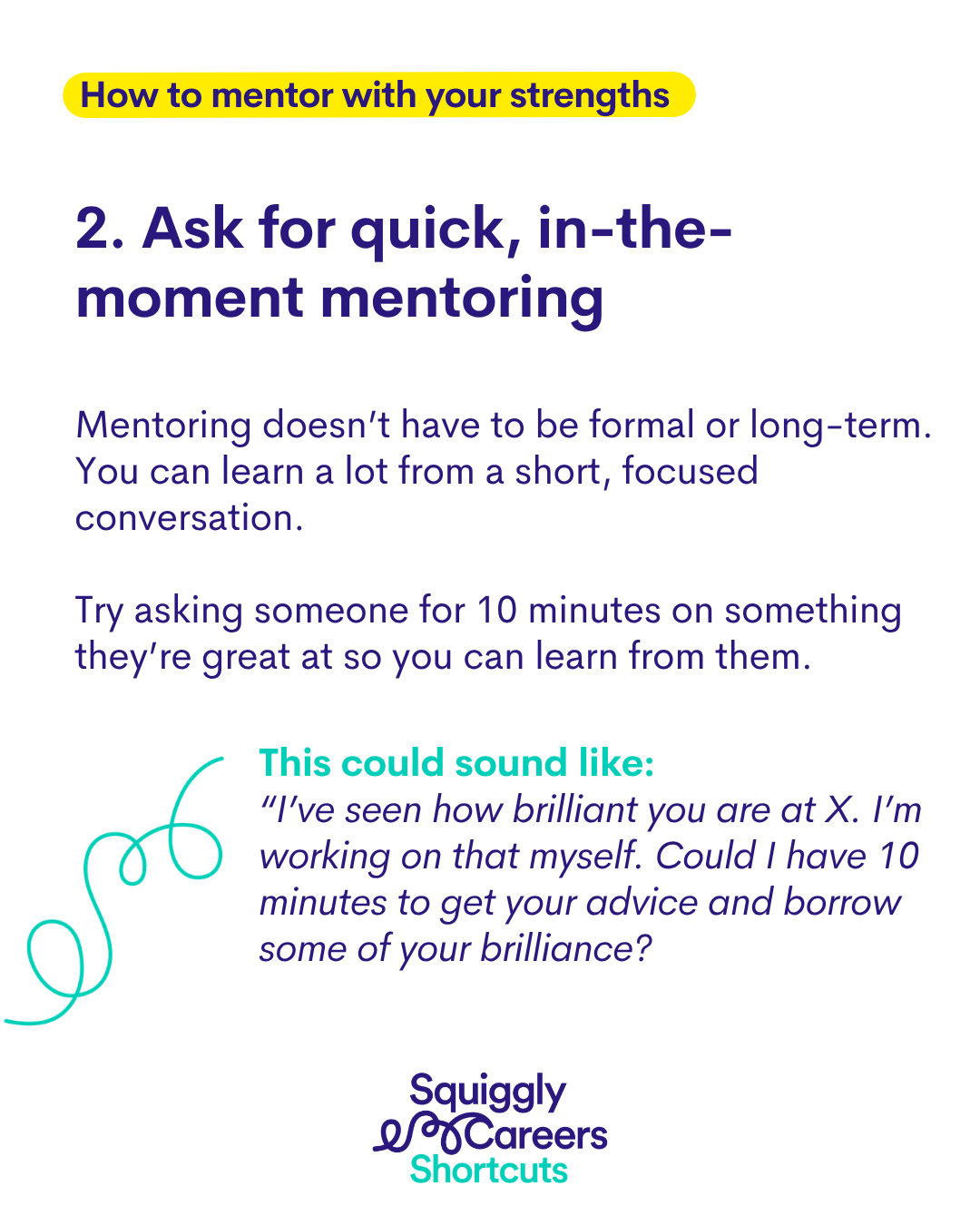
And so maybe if you want some mentoring, perhaps you could start asking for mentoring based on something that you want to improve in and a strength that you see in other people. So maybe your ask sounds like, I see that you are brilliant at presenting. Your combination of storytelling and data points is just brilliant. I'm working on that for myself. I wonder if I could have 10 minutes to have a quick chat to get some advice, borrow a bit of brilliance from you. So you make your ask easier because you're being really specific. Who doesn't want to be told they're good at something? Don't forget, we're often our own worst critics. And in my experience, people do really like helping people. So most people will try and find a way to say yes to that ask. And even if they can't remember, we're asking multiple people, maybe people in your team and in other teams in your organisation.
If you work in a big company, maybe in your organisation, out of your organisation, maybe in and out of your industry. So look for multiple mentors from different places and spaces.
But perhaps start with thinking about strengths, both in terms of what you want to gain, but also what you can give too. And if you want to learn more about strengths, one of our most popular podcast episodes is how to make your strengths show up and stand out. And that's episode 122.
And if you've got any ideas for shortcuts that you'd love to see from us. So topics that you need some support with in your squiggly career, you can email us. We're helenandsarah@squigglycareers.com but I hope you're finding these useful. And we're back again soon with another squiggly shortcut. Thanks so much.
Sign up to the Squiggly Careers Newsletter and get our latest ideas, tools and inspiration every week - all in one place, straight to your inbox


